
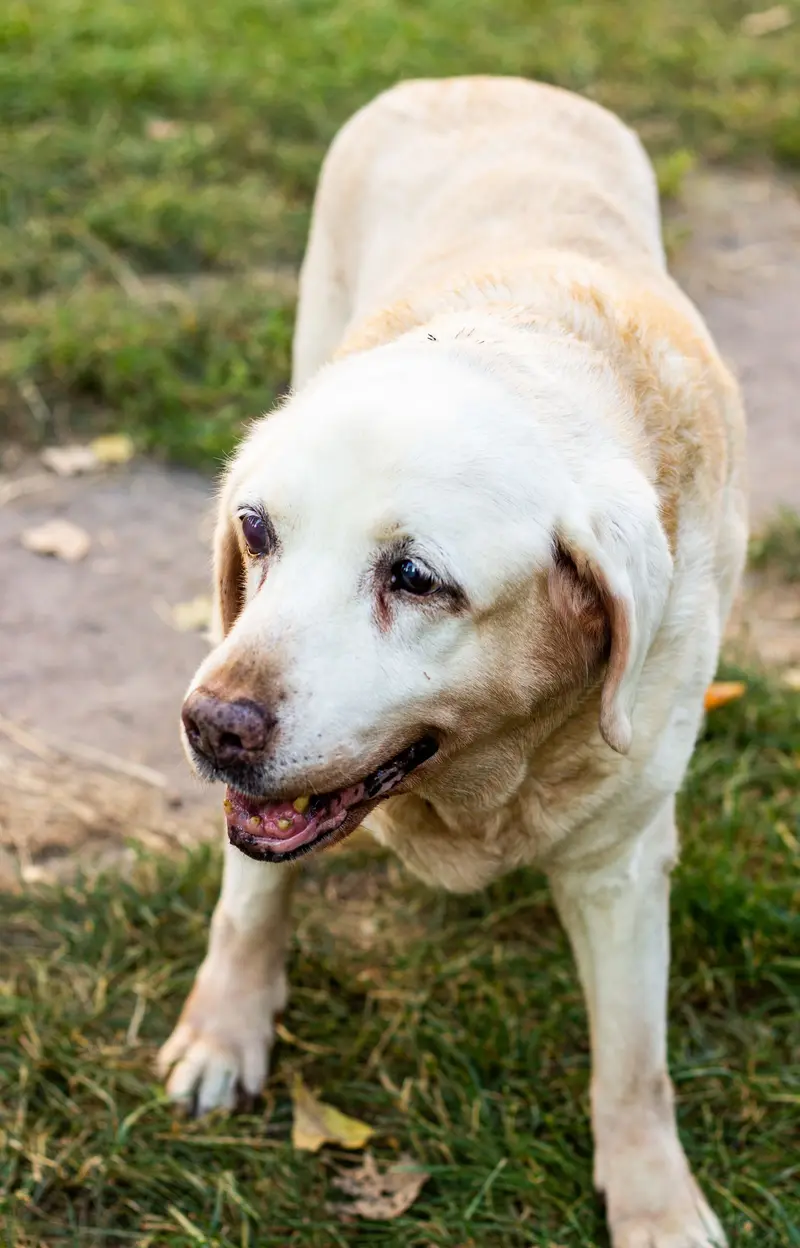
Dog years to human years chart
This chart is used widely by veterinarians. It counts about 15 human years for a dog's first year and about 9 more for the second. After that, each year adds 4–9 human years depending on size.
| Dog age | Small | Medium | Large | Giant |
|---|---|---|---|---|
| 1 | 15 | 15 | 15 | 12 |
| 2 | 24 | 24 | 24 | 22 |
| 3 | 28 | 28 | 28 | 31 |
| 4 | 32 | 32 | 32 | 38 |
| 5 | 36 | 36 | 36 | 45 |
| 6 | 40 | 42 | 45 | 49 |
| 7 | 44 | 47 | 50 | 56 |
| 8 | 48 | 51 | 55 | 64 |
| 9 | 52 | 56 | 61 | 71 |
| 10 | 56 | 60 | 66 | 79 |
| 11 | 60 | 65 | 72 | 86 |
| 12 | 64 | 69 | 77 | 93 |
| 13 | 68 | 74 | 82 | 100 |
| 14 | 72 | 78 | 88 | 107 |
| 15 | 76 | 83 | 93 | 114 |
| 16 | 80 | 87 | 99 | 120 |
Why the "multiply by 7" rule is wrong
Dogs reach adulthood far faster than people. Most dogs can have puppies before they are 1 year old, something no 7-year-old child can do. Aging then slows down. It also depends on body size: small breeds often live 14–16 years, while giant breeds may live 7–10.
The DNA-based formula
In 2020, researchers at UC San Diego compared "epigenetic clocks" (chemical changes in DNA that build up with age) in Labrador Retrievers and humans. Their formula is:
Human age = 16 × ln(dog age) + 31
It suggests dogs age extremely fast early on: a 1-year-old Labrador is like a 31-year-old human. It was only tested in one breed, so we show it as a second opinion next to the chart.
When your dog becomes a senior
Once your dog reaches the senior range for its size, consider:
- Vet checkups every 6 months, including blood work.
- Watching weight closely. Older dogs often need fewer calories (try our dog food calculator, and choose "Senior or less active").
- Joint-friendly exercise like shorter, more frequent walks.
- Dental care, since dental disease is very common in older dogs.
Frequently asked questions
Is 1 dog year really 7 human years?
No. The "multiply by 7" rule is a myth. Dogs age very fast in their first two years. A 1-year-old dog is roughly like a 15-year-old human, and a 2-year-old is about 24. After that, aging slows and depends on size.
Why do large dogs age faster than small dogs?
Large and giant breeds reach old age sooner and usually have shorter lifespans. Researchers think fast growth plays a role. That is why a 10-year-old Great Dane is much "older" than a 10-year-old Chihuahua.
At what age is a dog considered a senior?
Vets usually consider a dog senior in the last quarter of its expected lifespan. That is roughly 6–7 years for large and giant breeds and 8–10 years for small breeds. Seniors benefit from vet checkups every 6 months.
What is the DNA-based dog age formula?
A 2020 study from UC San Diego compared DNA aging markers in Labrador Retrievers and humans. It proposed human age = 16 × ln(dog age) + 31. It was studied in one breed only, so we show it alongside the size-based chart.
Guides that use this calculator

More free pet calculators
See all calculators Nutrition & Feeding
Dog Food Calculator
How many calories and cups your dog needs per day.
Open calculator Health & Safety
Dog Chocolate Toxicity Calculator
Check how dangerous the chocolate your dog ate is.
Open calculator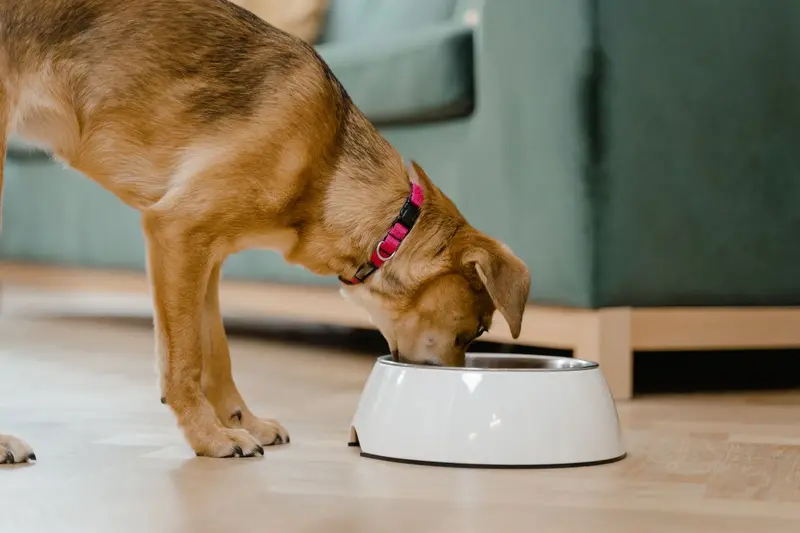 Health & Safety
Can My Dog Eat It? Food Checker
Search 40+ human foods: safe, careful or toxic for dogs.
Open calculator Puppies, Kittens & Seniors
Puppy Weight Calculator
Estimate how big your puppy will be as an adult.
Open calculator Puppies, Kittens & Seniors
Cat Age Calculator
Convert your cat's age to human years.
Open calculator Nutrition & Feeding
Cat Food Calculator
Daily calories, cups of dry food and cans of wet food.
Open calculator Puppies, Kittens & Seniors
Dog Pregnancy Calculator
Find your dog's due date and pregnancy timeline.
Open calculator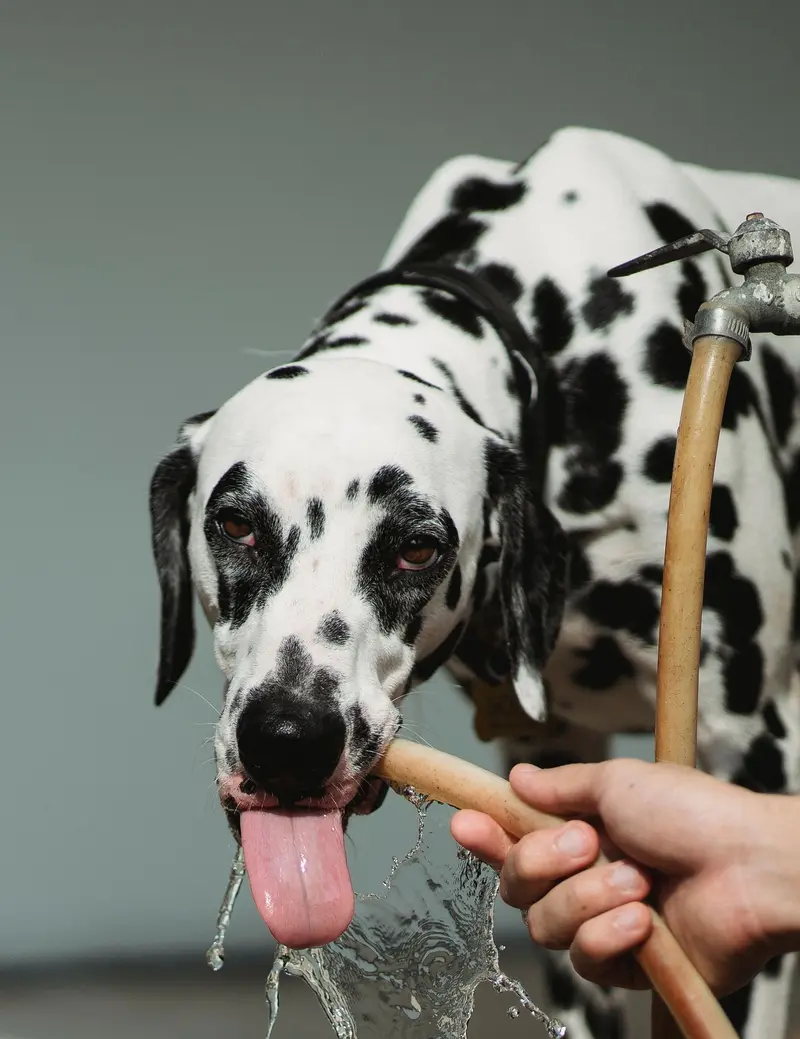 Nutrition & Feeding
Dog Water Intake Calculator
How much water your dog should drink per day.
Open calculator Nutrition & Feeding
Dog Weight Loss Calculator
Your dog's ideal weight, diet calories and time to goal.
Open calculator