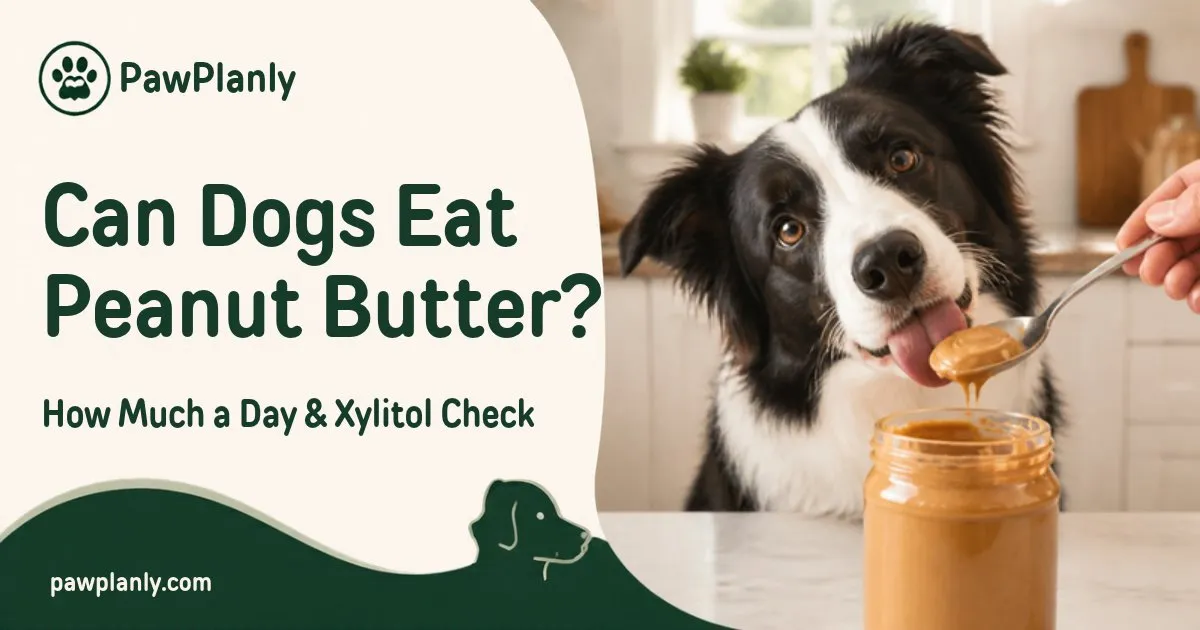
Yes, most dogs can eat peanut butter, as long as it does not contain xylitol. Plain peanut butter is safe in small amounts, but it is very high in fat and calories, so think teaspoons, not spoonfuls: about 1 teaspoon a day for a 10 lb dog and about 1 tablespoon for a 40 lb dog. Always read the label first, because peanut butter sweetened with xylitol can be deadly to dogs.
Peanut butter is one of the most popular dog treats in the US. It’s great for stuffing chew toys, hiding pills and rewarding good behavior. The two things to get right are what’s in the jar and how much you give.
Checking a different food? Search 40+ human foods with our Can My Dog Eat It? checker.
Quick answer: peanut butter for dogs
| Question | Answer |
|---|---|
| Is peanut butter safe for dogs? | Yes, if it has no xylitol |
| Best type | Plain, unsalted, no added sugar |
| How much a day? | About 1 tsp (10 lb dog) to 1 tbsp (40 lb dog) |
| Calories | About 30 per teaspoon, 95 per tablespoon |
| Every day? | OK in small, measured amounts |
| Xylitol / “birch sugar” on the label? | Never: it is toxic to dogs |
| PB cookies, PB&J, chocolate PB cups? | No |
Is peanut butter good for dogs?
In moderation, it can be a healthy treat. The American Kennel Club (AKC) says peanut butter provides protein, healthy fats, vitamins B and E, and niacin. Most dogs love the taste, which makes it handy for training and vet-visit distractions.
The downside is how rich it is. One tablespoon (about 16 g) of regular smooth peanut butter has roughly 95 calories and 8 grams of fat. The AKC warns that too much can lead to obesity and other problems such as pancreatitis, a painful inflammation of the pancreas linked to fatty foods.
Your dog doesn’t need peanut butter. A complete and balanced dog food already covers their nutrition. Treat it as a reward, not a supplement.
How much peanut butter can a dog have a day?
Vets commonly recommend that treats make up no more than 10% of your dog’s daily calories, and the AKC uses the same 10% rule for peanut butter. The table below shows that 10% budget for typical spayed or neutered adult dogs and how much peanut butter it equals:
| Dog weight | Daily treat budget (10%) | Peanut butter (max, no other treats) |
|---|---|---|
| 10 lb (4.5 kg) | About 35 kcal | About 1 tsp (5 g) |
| 20 lb (9 kg) | About 60 kcal | About 2 tsp (10 g) |
| 40 lb (18 kg) | About 100 kcal | About 3 tsp / 1 tbsp (16 g) |
| 60 lb (27 kg) | About 135 kcal | About 4 tsp (21 g) |
| 80 lb (36 kg) | About 165 kcal | About 5 tsp (26 g) |
These are upper limits for a day when your dog gets no other treats. If your dog also gets chews, biscuits or table scraps, give less peanut butter, around half these amounts. Very active dogs burn more calories, and dogs on a diet need less.
To find your own dog’s numbers, use our dog food calculator and take 10% of the daily calories. Our guide on how much to feed your dog explains how those calories are worked out.
Measure it. A “lick off the spoon” is often a heaping tablespoon. Use a measuring teaspoon until you know what the right amount looks like.
Xylitol: the one label check that matters
Xylitol is a sugar substitute that is safe for people but toxic to dogs. The FDA lists “some peanut and nut butters” among the products that may contain it, along with sugar-free gum, candy, baked goods, chewable vitamins and toothpaste.
Here’s why it’s so dangerous. In dogs, xylitol causes a fast release of insulin, which makes blood sugar drop sharply. The FDA says this can happen within 10 to 60 minutes of eating it, and it can be life-threatening without treatment. The Merck Veterinary Manual says low blood sugar has been seen at doses above about 100 mg per kg of body weight (45 mg per lb), and some dogs may develop liver failure above about 500 mg/kg (227 mg/lb).
How to check a jar:
- Read the full ingredient list, not just the front of the jar.
- Look for “xylitol,” “birch sugar” or “wood sugar.” The FDA notes xylitol can go by these names.
- Be extra careful with jars labeled “sugar-free,” “low sugar,” “keto” or “reduced sugar.”
- Check again when you switch brands or the label changes.
Most regular peanut butter does not contain xylitol, but you can’t tell without reading the label. The AKC says the healthiest choices are unsalted, homemade or dog-specific peanut butter.
Peanut butter foods your dog should NOT eat
Plain peanut butter is fine. These peanut butter snacks are not good choices:
- Peanut butter cookies: high in sugar and fat; sugar-free recipes may use xylitol.
- Peanut butter and jelly sandwiches: grape jelly is made from grapes, which can cause kidney failure in dogs. See why in our guide on why dogs can’t eat grapes.
- Chocolate peanut butter cups and candy: chocolate is toxic to dogs. If your dog got into some, read what to do if your dog ate chocolate.
- Peanut butter pretzels and crackers: salty and low in nutrition. A crumb is harmless, a bag is not.
- Peanut butter with honey: extra sugar your dog doesn’t need. A tiny amount is not toxic, but skip it for diabetic or overweight dogs.
Can dogs eat peanut butter every day?
Yes, many healthy adult dogs can have a small, measured amount every day, as long as it fits inside their 10% treat budget. If your dog starts gaining weight, cut back or swap some peanut butter for low-calorie treats such as apple slices or carrot sticks. Our dog weight loss calculator can help if your dog needs to slim down.
Puppies: a tiny lick (well under 1 teaspoon) is fine once they eat solid food. Keep most of their calories coming from a complete puppy food.
Dogs with health problems: ask your vet first
The AKC advises calling your vet before feeding peanut butter regularly if your dog has diabetes or food sensitivities. Also ask first if your dog has:
- A history of pancreatitis or a sensitive stomach (fatty foods can trigger a flare-up)
- Kidney or liver disease, or any prescription diet
- Diarrhea right now (a rich, fatty treat can make it worse)
- A weight-loss plan
Some dogs can also be allergic or sensitive to peanuts. Stop feeding it if you see itching, ear problems or stomach upset.
How to serve peanut butter to your dog
- Check the label for xylitol and choose plain, unsalted peanut butter.
- Measure the portion with a teaspoon.
- Make it last. Spread a thin layer inside a stuffable chew toy or on a lick mat and freeze it for a few hours.
- Mix it up. Pair a little peanut butter with dog-safe fruit like banana slices or apple, and count the total toward the treat budget.
For a frozen chew toy, a medium dog only needs about 1 to 2 teaspoons. Fill the rest with soaked kibble from your dog’s daily meal.
When to call the vet
Plain peanut butter rarely causes more than a mild upset stomach. Call your vet if your dog has:
- Vomiting more than once or diarrhea that lasts more than a day
- Belly pain, a hunched back, or refusing food (possible signs of pancreatitis after a big fatty binge, like licking out a whole jar)
- Itching, facial swelling or hives
- Gagging or choking on a thick mouthful
Call your vet, an emergency clinic or the ASPCA Animal Poison Control Center at (888) 426-4435 right away if your dog ate peanut butter or another product that may contain xylitol, even if they seem fine. A consultation fee may apply. The FDA lists the signs of xylitol poisoning as vomiting, weakness, staggering, poor coordination, collapse and seizures. Don’t wait for signs to appear.
The bottom line
Peanut butter is a safe, much-loved treat for most dogs. Pick a plain jar with no xylitol, measure it (about 1 teaspoon for a 10 lb dog, about 1 tablespoon for a 40 lb dog at most), and count it in the 10% treat budget. Skip cookies, PB&J and chocolate peanut butter candy. Use our dog food calculator to find your dog’s daily treat budget, and check other snacks with the Can My Dog Eat It? tool.
Frequently asked questions
How much peanut butter can a dog have a day?
Keep it inside your dog's treat budget, which is no more than 10% of daily calories. Peanut butter has about 30 calories per teaspoon, so that works out to about 1 teaspoon for a 10 lb dog, 2 teaspoons for a 20 lb dog and 1 tablespoon for a 40 lb dog, and only if your dog gets no other treats that day.
Can dogs eat peanut butter every day?
A small daily lick of plain, xylitol-free peanut butter is fine for many healthy dogs, as long as it fits within the 10% treat limit. Because it is high in fat and calories, daily use can lead to weight gain, so measure it instead of scooping freely.
Which peanut butter is safe for dogs?
Choose plain peanut butter with no xylitol (also listed as birch sugar), ideally unsalted with no added sugar. The AKC says unsalted, homemade or dog-specific peanut butter is the healthiest choice. Read the full ingredient list every time you buy a new jar.
Can dogs eat peanut butter cookies or peanut butter and jelly?
It's best not to. Peanut butter cookies are high in sugar and fat, and some sugar-free recipes use xylitol. Grape jelly is made from grapes, which can cause kidney failure in dogs, so skip PB&J sandwiches too.
What should I do if my dog ate peanut butter with xylitol?
Call your vet, an emergency clinic or the ASPCA Animal Poison Control Center at (888) 426-4435 right away, even if your dog seems fine. The FDA says blood sugar can drop dangerously within 10 to 60 minutes.
Sources
This guide is for general information and does not replace advice from your veterinarian. If you are worried about your pet, contact your vet. How we write our guides.